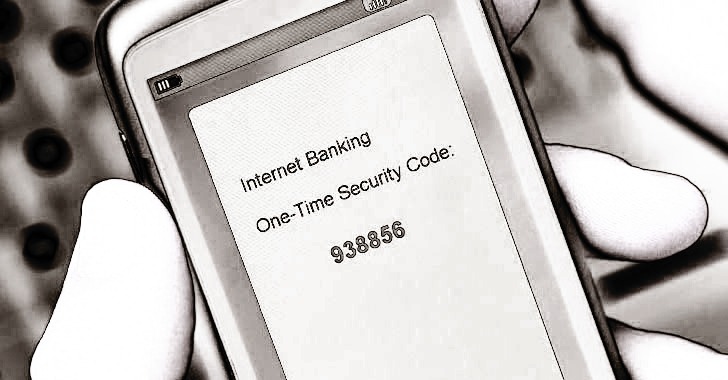
developed a new Android app that can intercept one-time
authorization codes sent to Internet banking customers via SMS or
relatively more secure push notifications, and complete fraudulent
transactions.
The Android app, called “TrickMo[1]” by IBM X-Force
researchers, is under active development and has exclusively
targeted German users whose desktops have been previously infected
with the TrickBot malware.
“Germany is one of the first attack turfs TrickBot spread to
when it first emerged in 2016,” IBM researchers said. “In 2020, it
appears that TrickBot’s vast bank fraud is an ongoing project that
helps the gang monetize compromised accounts.”
The name TrickMo is a direct reference to a similar kind of
Android banking malware called ZitMo that was
developed by Zeus cybercriminal gang in 2011 to defeat SMS-based
two-factor authentication.
[2]
The development is the latest addition in the arsenal of evolving
capabilities of the banking trojan that has since morphed to
deliver other kinds of malware, including the notorious Ryuk
ransomware, act as an info stealer, loot Bitcoin wallets, and
harvest emails and credentials.
Abusing Android’s Accessibility Features to Hijack OTP
Codes
Initially spotted by the CERT-Bund last September, the TrickMo
campaign works by intercepting a wide range of transaction
authentication numbers (TANs), including one-time password
(OTP), mobile TAN (mTAN), and pushTAN authentication codes after
victims install it on their Android devices.
CERT-Bund’s advisory[6] went on to state that
the Windows computers infected by TrickBot employed man-in-the-browser[7]
(MitB) attacks to ask victims for their online banking mobile phone
numbers and device types in order to prompt them to install a fake
security app — now called TrickMo.
the messages can be easily hijacked by rogue third-party apps and
are also vulnerable to SIM-swapping
attacks — banks are beginning to increasingly rely on push
notifications for users, which contain the transaction details and
the TAN number.
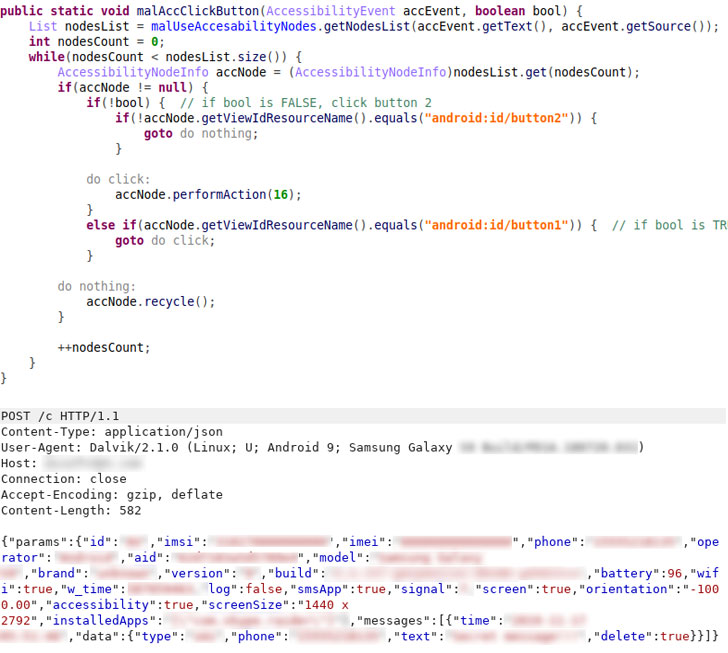
To get over this hurdle of getting hold of the app’s push
notifications, TrickMo makes use of Android’s
accessibility features[9]
that allows it to record a video of the app’s screen, scrape the
data displayed on the screen, monitor currently running
applications and even set itself as the default SMS app.
What’s more, it prevents users of infected devices from
uninstalling the app.
A Wide Range of Features
Once installed, TrickMo is also capable of gaining persistence by
starting itself after the device becomes interactive or after a new
SMS message is received. In addition, it features an elaborate
settings mechanism that lets a remote attacker issue commands to
turn on/off specific features (e.g., accessibility permissions,
recording status, SMS app status) via a command-and-control (C2)
server or an SMS message.
When the malware is run, it exfiltrates a wide range of
information, including —
- Personal device information
- SMS messages
- Recording targeted applications for a one-time password
(TAN) - Photos
But to avoid raising suspicion when stealing the TAN codes,
TrickMo activates the lock screen, thereby preventing users from
accessing their devices. Specifically, it uses a fake Android
update screen to mask its OTP-stealing operations.
And lastly, it comes with self-destruction and removal
functions, which allows the cybercrime gang behind TrickMo to
remove all traces of the malware’s presence from a device after a
successful operation.
The kill switch can also be activated by SMS, but IBM
researchers found that it was possible to decrypt the encrypted SMS
commands using a hard-coded RSA private key embedded in the source
code, thus making it possible to generate the public key and craft
an SMS message that can turn the self-destruct feature on.
Although this means that the malware can be remotely eliminated
by an SMS message, it’s fair to assume that a future version of the
app could rectify the use of hard-coded key strings for
decryption.
“The TrickBot trojan was one of the most active banking malware
strains in the cybercrime arena in 2019,” IBM researchers
concluded.
“From our analysis, it is apparent that TrickMo is designed to
help TrickBot break the most recent methods of TAN-based
authentication. One of the most significant features TrickMo
possesses is the app recording feature, which is what gives
TrickBot the ability to overcome the newer pushTAN app validations
deployed by banks.”
References
- ^
TrickMo
(securityintelligence.com) - ^
ZitMo
(securelist.com) - ^
arsenal of evolving capabilities
(thehackernews.com) - ^
Ryuk ransomware
(duo.com) - ^
transaction authentication numbers
(en.wikipedia.org) - ^
advisory
(twitter.com) - ^
man-in-the-browser
(en.wikipedia.org) - ^
SIM-swapping attacks
(thehackernews.com) - ^
Android’s accessibility features
(developer.android.com)
Read more http://feedproxy.google.com/~r/TheHackersNews/~3/fFWdOn3AYCs/trickbot-two-factor-mobile-malware.html