malicious campaign dating back to May 2018 that targets Windows
machines running MS-SQL servers to deploy backdoors and other kinds
of malware, including multi-functional remote access tools (RATs)
and cryptominers.
Named “Vollgar” after the Vollar cryptocurrency it mines
and its offensive “vulgar” modus operandi, researchers at Guardicore Labs
said the attack employs password brute-force to breach Microsoft
SQL servers with weak credentials exposed to the Internet.
[1]
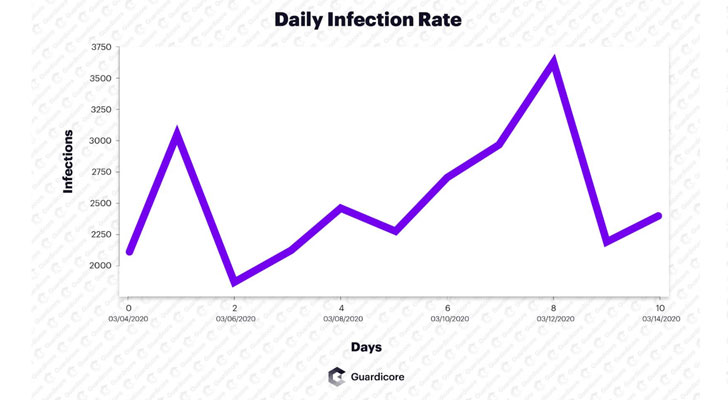
Researchers claim the attackers managed to successfully infect
nearly 2,000-3,000 database servers daily over the past few weeks,
with potential victims belonging to healthcare, aviation, IT &
telecommunications, and higher education sectors across China,
India, the US, South Korea, and Turkey.
script to let sysadmins detect if any of their Windows MS-SQL
servers have been compromised with this particular threat.
Vollgar Attack Chain: MS-SQL to System Malware
The Vollgar attack starts off with brute-force login attempts on
MS-SQL servers,
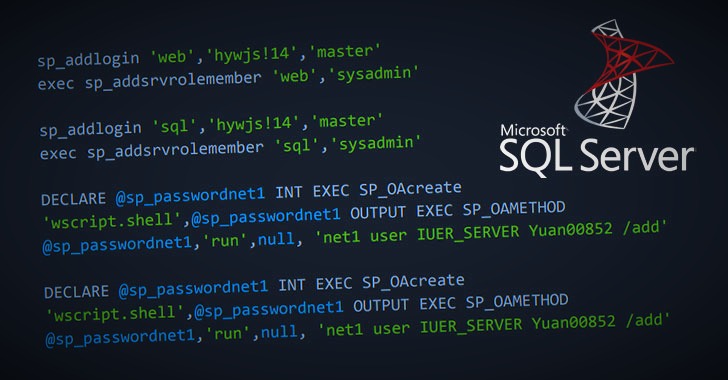
which, when successful, allows the interloper to execute a number
of configuration changes to run malicious MS-SQL commands and
download malware binaries.
“Attackers [also] validate that certain COM classes are
available – WbemScripting.SWbemLocator, Microsoft.Jet.OLEDB.4.0 and
Windows Script Host Object Model (wshom). These classes support
both WMI scripting and command execution through MS-SQL, which will
be later used to download the initial malware binary,” the
researchers said.
necessary execute permissions, the operator behind Vollgar also
creates new backdoor users to the MS-SQL database as well as on the
operating system with elevated privileges.
Upon completion of the initial setup, the attack proceeds to
create downloader scripts (two VBScripts and one FTP script), which
are executed “a couple of times,” each time with a different target
location on the local file system to avert possible
failures.
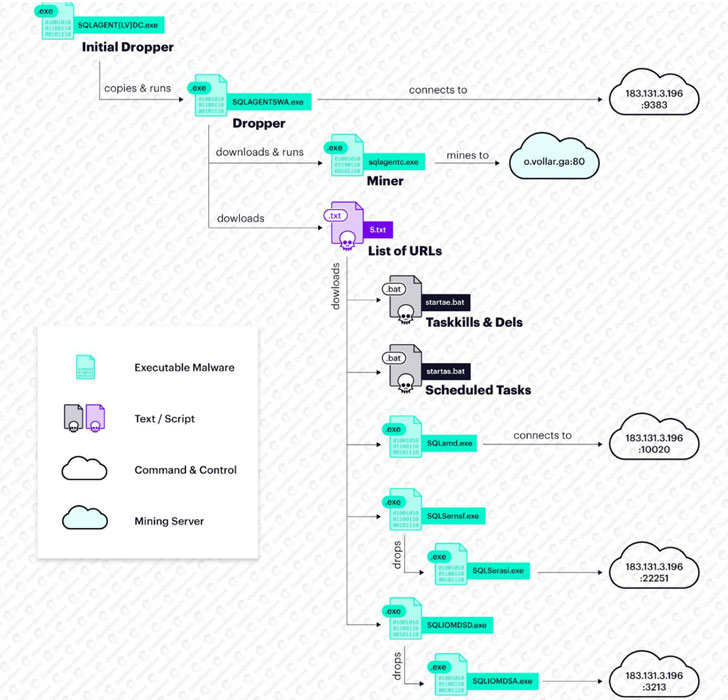
One of the initial payloads, named SQLAGENTIDC.exe or
SQLAGENTVDC.exe, first proceeds to kill a long list of processes
with the goal of securing the maximum amount of system resources as
well as eliminate other threat actors’ activity and remove their
presence from the infected machine.
Furthermore, it acts as a dropper for different RATs and an
XMRig-based crypto-miner that mines Monero and an alt-coin called
VDS or Vollar.
Attack Infrastructure Hosted On Compromised Systems
Guardicore said attackers held their entire infrastructure on
compromised machines, including its primary command-and-control
server located in China, which, ironically, was found compromised
by more than one attack group.
“Among the files [on the C&C server] was the MS-SQL attack
tool, responsible for scanning IP ranges, brute-forcing the
targeted database, and executing commands remotely,” the
cybersecurity firm observed.
“In addition, we found two CNC programs with GUI in Chinese, a tool
for modifying files’ hash values, a portable HTTP file server
(HFS), Serv-U FTP server and a copy of the executable mstsc.exe
(Microsoft Terminal Services Client) used to connect to victims
over RDP.”
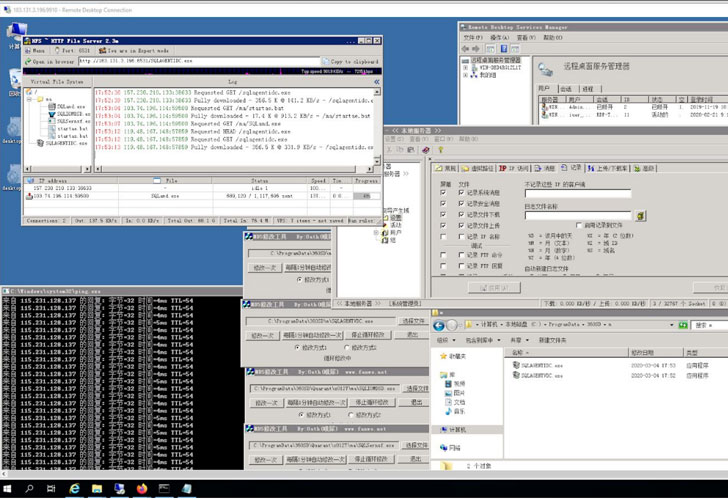
also receives a variety of details about the machine, such as its
public IP, location, operating system version, computer name, and
CPU model.
Stating that the two C2 programs installed on the China-based
server were developed by two different vendors, Guardicore said
there are similarities in their remote control capabilities —
namely downloading files, installing new Windows services,
keylogging, screen capturing, activating the camera and microphone,
and even initiating a Distributed Denial-of-Service (DDoS)
attack.
Use Strong Passwords to Avoid Brute-Force Attacks
With about half-a-million machines running MS-SQL database service,
the campaign is yet another indication that attackers are going
after poorly protected database servers in an attempt to siphon
sensitive information. It’s essential that MS-SQL servers that are
exposed to the internet are secured with strong credentials.
“What makes these database servers appealing for attackers apart
from their valuable CPU power is the huge amount of data they
hold,” Guardicore researchers concluded. “These machines possibly
store personal information such as usernames, passwords, credit
card numbers, etc., which can fall into the attacker’s hands with
only a simple brute-force.”
References
- ^
Guardicore Labs
(www.guardicore.com) - ^
released a script
(github.com) - ^
MS-SQL servers
(thehackernews.com)
Read more http://feedproxy.google.com/~r/TheHackersNews/~3/AaO1rKvJ0qM/backdoor-.html