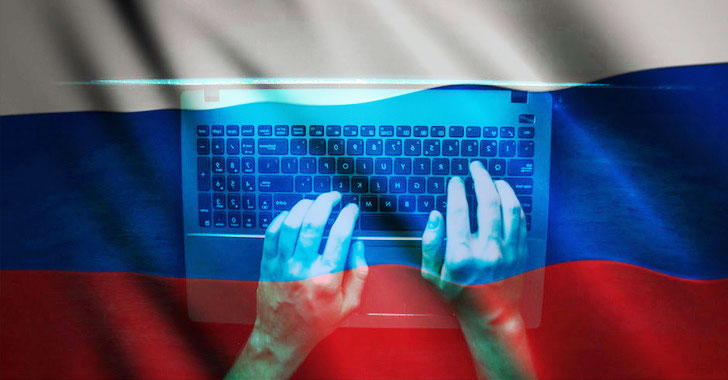
Cyber operatives affiliated with the Russian Foreign
Intelligence Service (SVR) have switched up their tactics in
response to previous public disclosures[1]
of their attack methods, according to a new advisory[2]
jointly published by intelligence agencies from the U.K. and U.S.
Friday.
“SVR cyber operators appear to have reacted […] by changing
their TTPs in an attempt to avoid further detection and remediation
efforts by network defenders,” the National Cyber Security Centre
(NCSC) said[3].
These include the deployment of an open-source tool called
Sliver[4]
to maintain their access to compromised victims as well as
leveraging the ProxyLogon flaws in Microsoft Exchange servers to
conduct post-exploitation activities.
The development followed the public attribution[5]
of SVR-linked actors to the SolarWinds[6]
supply-chain attack last month. The adversary is also tracked under
different monikers, such as Advanced Persistent Threat 29 (APT29),
the Dukes, CozyBear, and Yttrium.
The attribution was also accompanied by a technical report
detailing five vulnerabilities that the SVR’s APT29 group was using
as initial access points to infiltrate U.S. and foreign
entities.
“The SVR targets organisations that align with Russian foreign
intelligence interests, including governmental, think-tank, policy
and energy targets, as well as more time bound targeting, for
example COVID-19 vaccine[7]
targeting in 2020,” the NCSC said.
This was followed by separate guidance on April 26 that shed more light[8]
on the techniques used by the group to orchestrate intrusions,
counting password spraying, exploiting zero-day flaws against
virtual private network appliances (e.g., CVE-2019-19781) to obtain
network access, and deploying a Golang malware called WELLMESS to
plunder intellectual property from multiple organizations involved
in COVID-19 vaccine development.
Now according to the NCSC, seven more vulnerabilities have been
added into the mix, while noting that APT29 is likely to “rapidly”
weaponize recently released public vulnerabilities that could
enable initial access to their targets.
“Network defenders should ensure that security patches are
applied promptly following CVE announcements for products they
manage,” the agency said.
References
- ^
public
disclosures (thehackernews.com) - ^
new
advisory (us-cert.cisa.gov) - ^
said
(www.ncsc.gov.uk) - ^
Sliver
(github.com) - ^
public
attribution (thehackernews.com) - ^
SolarWinds
(thehackernews.com) - ^
COVID-19
vaccine (www.ncsc.gov.uk) - ^
shed
more light (thehackernews.com)
Read more http://feedproxy.google.com/~r/TheHackersNews/~3/-JfcmQiD8Ak/top-11-security-flaws-russian-spy.html