RADIUS |
 |
RADIUS is a widely deployed protocol for AAA (Authentication, Authorization, and Accounting) control, while Diameter is a draft planned as its successor. … However, while RADIUS is a pure client-server protocol, Diameter is more of a peer-to-peer protocol, as also Diameter servers can ask for certain services
Industry Insight
The Importance of 3G Interworking with Diameter and RADIUS

The number of LTE networks is expected to be 460 by the end of 2015, supporting approximately 500 million subscribers at the end of 2014, according to data from GSMA Intelligence. There is continued phenomenal growth in sight, but that doesn’t mean 3G should be forgotten. In fact, it’s quite the opposite; 3G connections will continue to grow at least through 2020 where the forecasting ends, also according to GSMA. It’s likely to continue growing beyond that, too.
This means many more 3G connections, far more than LTE, at least until 2020. And that means 3G cannot be forgotten if you have an LTE network, and that interworking with 3G is critical for subscriber call/data completion. In other words, you’ll be leaving money on the table if this interworking is not supported. From a roaming perspective, supporting the Diameter to MAP/SS7 Interworking function as defined in 3GPP Technical Spec 29.305 is critical. Ignoring this interworking means ignoring revenue.
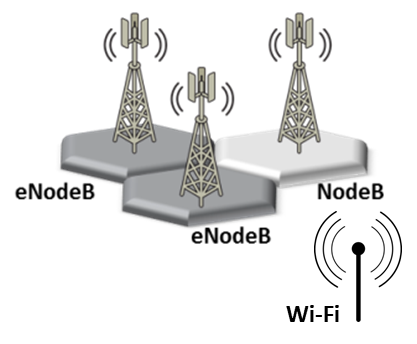
We also know WiFi offload is becoming a critical component of the network connectivity story. We’ve all read about 3G cell site congestion. WiFi offload from 3G then also becomes important, which means support of RADIUS to MAP is also critical. WiFi offload is also important for LTE, less from a cell site congestion perspective but more from a perspective of seamlessly extending the network for the subscriber.
Dialogic has been in the signaling business since the 1990’s and has supported signaling interworking since then. Today, the Dialogic’s Helix product supports both of these critical signaling interworking functions. Come visit us at the LTE World Summit, taking place June 23-25 at Amsterdam RAI, at Booth #65.
RADIUS |
|
Remote Authentication Dial-In User Service (RADIUS) is a widely deployed system to provide authentication, authorization and accounting for network access. Originally, RADIUS was developed for dial-up remote access. Nowadays, RADIUS is used by many (wired and wireless) Internet service providers and end user organisations to provide secure Internet access.
When a user wants to get access to the Internet he will first have to give his users credentials (in most cases username and password) to a local RADIUS client. The RADIUS client passes this information to a RADIUS server. This server checks that the information is correct and then authorizes access.
Transactions between the client and RADIUS server are authenticated through the use of a shared secret, which is never sent over the network. The shared secret is used to secure the information that is transmitted between the client and the server. The shared secret is commonly configured as a text string on both the RADIUS client and the RADIUS server.
RADIUS is described in RFC 2865. RFC 2866 gives information about the use of RADIUS for accounting.
Remote Authentication Dial-In User Service (RADIUS) is a widely deployed system to provide authentication, authorization and accounting for network access. Originally, RADIUS was developed for dial-up remote access. Nowadays, RADIUS is used by many (wired and wireless) Internet service providers and end user organisations to provide secure Internet access.
When a user wants to get access to the Internet he will first have to give his users credentials (in most cases username and password) to a local RADIUS client. The RADIUS client passes this information to a RADIUS server. This server checks that the information is correct and then authorizes access.
Transactions between the client and RADIUS server are authenticated through the use of a shared secret, which is never sent over the network. The shared secret is used to secure the information that is transmitted between the client and the server. The shared secret is commonly configured as a text string on both the RADIUS client and the RADIUS server.
RADIUS is described in RFC 2865. RFC 2866 gives information about the use of RADIUS for accounting.