Dec 16, 2022Ravie Lakshmanan

Microsoft on Thursday flagged a cross-platform botnet that’s
primarily designed to launch distributed denial-of-service (DDoS)
attacks against private Minecraft servers.
Called MCCrash, the botnet is characterized by
a unique spreading mechanism that allows it to propagate to
Linux-based devices despite originating from malicious software
downloads on Windows hosts.
“The botnet spreads by enumerating default credentials on
internet-exposed Secure Shell (SSH)-enabled devices,” the company
said[1]
in a report. “Because IoT devices are commonly enabled for remote
configuration with potentially insecure settings, these devices
could be at risk to attacks like this botnet.”
This also means that the malware could persist on IoT devices
even after removing it from the infected source PC. The tech
giant’s cybersecurity division is tracking the activity cluster
under its emerging moniker DEV-1028.
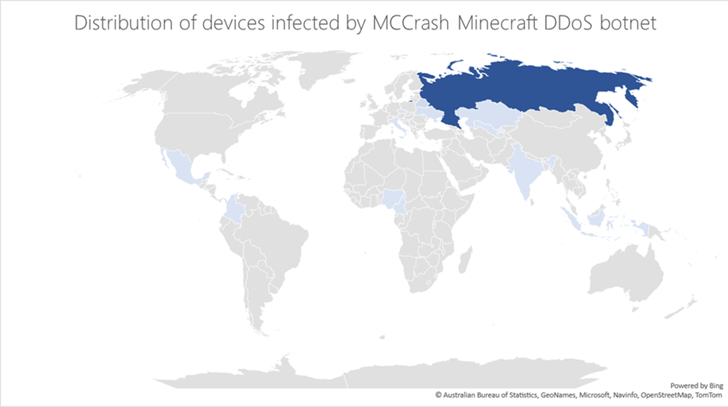
A majority of the infections have been reported in Russia, and
to a lesser extent in Kazakhstan, Uzbekistan, Ukraine, Belarus,
Czechia, Italy, India, and Indonesia. The company did not disclose
the exact scale of the campaign.
The initial infection point for the botnet is a pool of machines
that have been compromised through the installation of cracking
tools that claim to provide illegal Windows licenses.
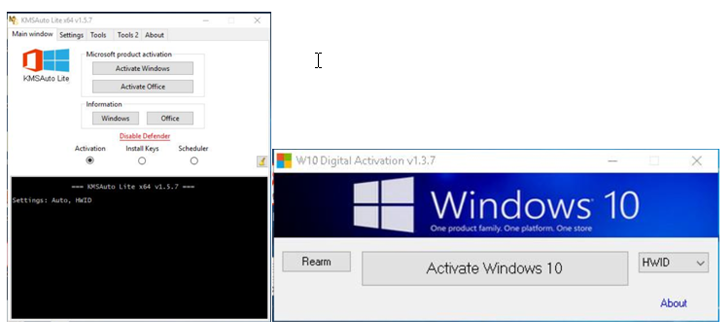
The software subsequently acts as a conduit to execute a Python
payload that contains the core features of the botnet, including
scanning for SSH-enabled Linux devices to launch a dictionary attack[2].
Upon breaching a Linux host using the propagation method, the
same Python payload is deployed to run DDoS commands, one of which
is specifically set up to crash Minecraft servers
(“ATTACK_MCCRASH”).
Microsoft described the method as “highly efficient,” noting
it’s likely offered as a service on underground forums.
“This type of threat stresses the importance of ensuring that
organizations manage, keep up to date, and monitor not just
traditional endpoints but also IoT devices that are often less
secure,” researchers David Atch, Maayan Shaul, Mae Dotan, Yuval
Gordon, and Ross Bevington said.
The findings come days after Fortinet FortiGuard Labs revealed
details of a new botnet dubbed GoTrim[3], which has been observed
brute-forcing self-hosted WordPress websites.
Found this article interesting? Follow us on Twitter [4]
and LinkedIn[5]
to read more exclusive content we post.
References
Read more https://thehackernews.com/2022/12/minecraft-servers-under-attack.html