
chain attack which appears to be one of the largest corporate
espionage and hardware hacking programs from a nation-state.
According to a lengthy report published[1]
today by Bloomberg, a tiny surveillance chip, not much bigger than
a grain of rice, has been found hidden in the servers used by
nearly 30 American companies, including Apple and Amazon.
The malicious chips, which were not part of the original server
motherboards designed by the U.S-based company Super Micro, had
been inserted during the manufacturing process in China.
The report, based on a 3-year-long top-secret investigation in
the United States, claims that the Chinese government-affiliated
groups managed to infiltrate the supply chain to install tiny
surveillance chips to motherboards which ended up in servers
deployed by U.S. military, U.S. intelligence agencies, and many
U.S. companies like Apple and Amazon.
“Apple made its discovery of suspicious chips inside Supermicro
servers around May 2015, after detecting odd network activity and
firmware problems, according to a person familiar with the
timeline,” the report said.
“Since the implants were small, the amount of code they
contained was small as well. But they were capable of doing two
very important things: telling the device to communicate with one
of several anonymous computers elsewhere on the internet that were
loaded with more complex code; and preparing the device’s operating
system to accept this new code.”
The chips suspected to have been added to help Chinese
government spy on American companies and their users—basically a
“hardware hack” that according to the publication is “more
difficult to pull off and potentially more devastating, promising
the kind of long-term, stealth access that spy agencies are willing
to invest millions of dollars and many years to get.”
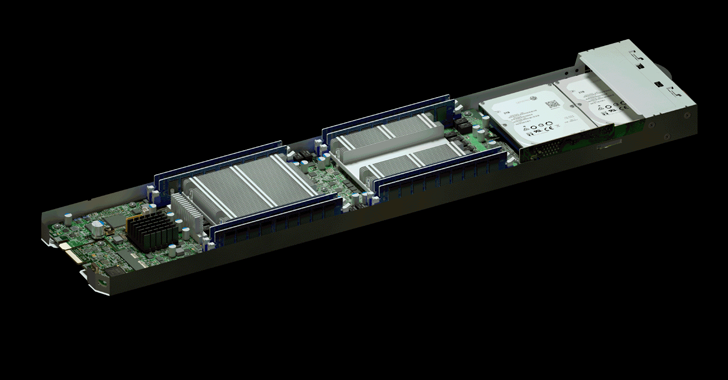
suggesting that the attackers had supplied different factories with
different batches,” the report said.
The publication claims that Apple and Amazon found these chips
on their server motherboards in 2015 and reported it to US
authorities, though both Apple and Amazon strongly refute the
claims.
Apple, Amazon, and Super Micro Refute the Bloomberg Report
Apple told Bloomberg that the company has never found malicious
chips, “hardware manipulations,” or vulnerabilities purposely
planted in any of its servers, or it “had any contact with the FBI
or any other agency about such an incident.”
Apple ended its relationship with Super Micro in 2016. To its
best guess, Apple said that the Bloomberg reporters confused their
story with a previously-reported 2016 incident in which the company
found an infected driver on a single Super Micro server in one of
its labs.
“While there has been no claim that customer data was involved, we
take these allegations seriously, and we want users to know that we
do everything possible to safeguard the personal information they
entrust to us,” Apple says. “We also want them to know that what
Bloomberg is reporting about Apple is inaccurate.”
chain compromise,” or “servers containing malicious chips or
modifications in data centers based in China,” or that it “worked
with the FBI to investigate or provide data about malicious
hardware.”
Meanwhile, Supermicro and Chinese Ministry of Foreign Affairs
have also strongly denied Bloomberg’s findings by releasing lengthy
statements. Here you can find a full list of official statements from
Amazon, Apple, Supermicro and Chinese Ministry of Foreign
Affairs.
[2]
References
- ^
published
(www.bloomberg.com) - ^
full list of official statements
(www.bloomberg.com)
Read more http://feedproxy.google.com/~r/TheHackersNews/~3/ueZ38I1ZlZA/china-spying-server-chips.html