In yet another indicator of how hacking groups are quick to
capitalize on world events and improvise their attack campaigns for
maximum impact, threat actors have been discovered impersonating
Amnesty International to distribute malware that purports to be
security software designed to safeguard against NSO Group’s Pegasus
surveillanceware.
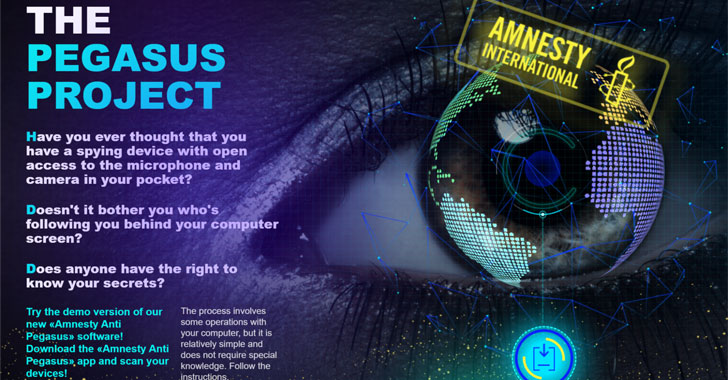
“Adversaries have set up a phony website that looks like Amnesty
International’s — a human rights-focused non-governmental
organization — and points to a promised antivirus tool to protect
against the NSO Group’s Pegasus tool,” Cisco Talos researchers
said[1]. “However, the download
actually installs the little-known Sarwent malware.”
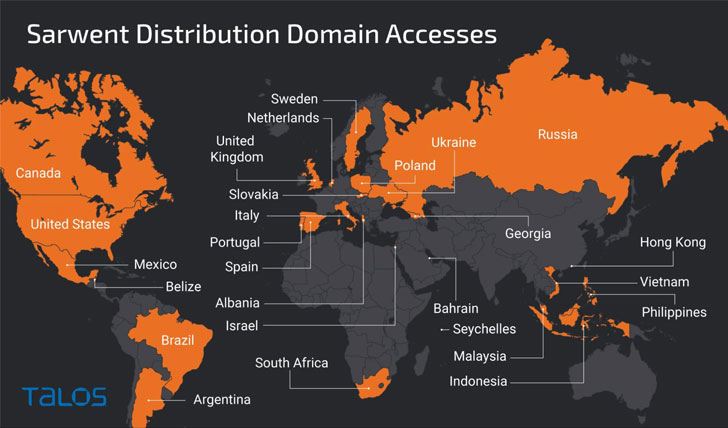
The countries most affected by the campaign include the U.K.,
the U.S., Russia, India, Ukraine, Czech Republic, Romania, and
Colombia. While it’s unclear as to how the victims are lured into
visiting the fake Amnesty International website, the cybersecurity
firm surmised the attacks could be aimed at users who may be
specifically searching for protection against this threat.
The development comes on the heels of an explosive investigation[2]
in July 2021 that revealed widespread abuse of the Israeli
company’s Pegasus “military-grade spyware” to facilitate human
rights violations by surveilling heads of state, activists,
journalists, and lawyers around the world. The NGO has since also
released a Mobile Verification Toolkit (MVT[3]) to help individuals
scan their iPhone and Android devices for evidence of
compromise.
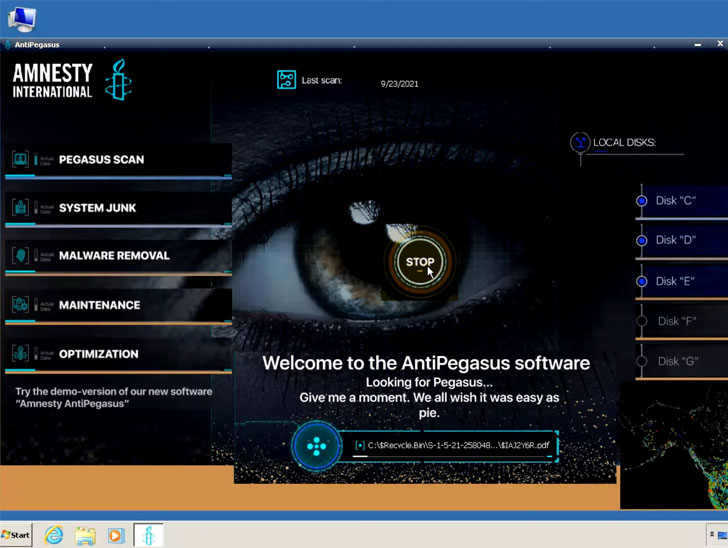
Besides making use of social engineering tricks by designing a
rogue website with an identical look and feel of Amnesty
International’s legitimate portal, the modus operandi aims to trick
the visitor into downloading an “Amnesty Anti Pegasus Software”
under the guise of an antivirus tool that features capabilities to
enable the bad actor find way a remote way into the compromised
machine and exfiltrate sensitive information, such as login
credentials.
The Sarwent sample used in the low-volume campaign is a
highly-customized variant coded in Delphi and is capable of
allowing remote desktop access through VNC[4]
or RDP[5]
and executing command line or PowerShell instructions received from
an attacker-controlled domain, the results of which are sent back
to the server.
Talos attributed the infections with high confidence to a
Russian-speaking actor locating in the country and known for
mounting attacks involving the Sarwent backdoor since at least
January 2021 sprawling across a variety of victims, noting the
level of modifications made to the supposed antivirus as likely
evidence that “the operator has access to the source code of the
Sarwent malware.”
“The campaign targets people who might be concerned that they
are targeted by the Pegasus spyware,” the researchers said. “This
targeting raises issues of possible state involvement, but there is
insufficient information […] to make any determination on which
state or nation. It is possible that this is simply a financially
motivated actor looking to leverage headlines to gain new
access.”