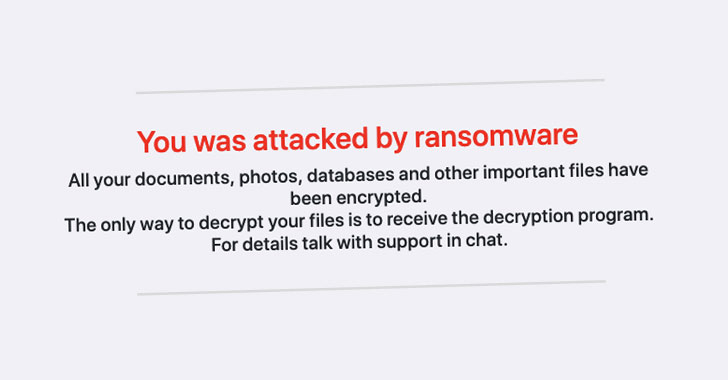
An “aggressive” financially motivated threat group tapped into a
zero-day flaw in SonicWall VPN appliances prior to it being patched
by the company to deploy a new strain of ransomware called
FIVEHANDS.
The group, tracked by cybersecurity firm Mandiant as UNC2447,
took advantage of an “improper SQL command neutralization” flaw in
the SSL-VPN SMA100 product (CVE-2021-20016[1], CVSS score 9[2].8) that allows an
unauthenticated attacker to achieve remote code execution.
“UNC2447 monetizes intrusions by extorting their victims first
with FIVEHANDS ransomware followed by aggressively applying
pressure through threats of media attention and offering victim
data for sale on hacker forums,” Mandiant researchers said[3]. “UNC2447 has been
observed targeting organizations in Europe and North America and
has consistently displayed advanced capabilities to evade detection
and minimize post-intrusion forensics.”
CVE-2021-20016 is the same zero-day[4]
that the San Jose-based firm said was exploited by “sophisticated
threat actors” to stage a “coordinated attack on its internal
systems” earlier this year. On January 22, The Hacker News
exclusively revealed[5]
that SonicWall had been breached by exploiting “probable zero-day
vulnerabilities” in its SMA 100 series remote access devices.
Successful exploitation of the flaw would grant an attacker the
ability to access login credentials as well as session information
that could then be used to log into a vulnerable unpatched SMA 100
series appliance.
According to the FireEye-owned subsidiary, the intrusions are
said to have occurred in January and February 2021, with the threat
actor using malware called SombRAT[6]
to deploy the FIVEHANDS ransomware. It’s worth noting that SombRAT
was discovered in November 2020 by BlackBerry researchers in
conjunction with a campaign called CostaRicto undertaken by a
mercenary hacker group.
UNC2447 attacks involving ransomware infections were first
observed in the wild in October 2020, initially compromising
targets with HelloKitty[7]
ransomware, before swapping it for FIVEHANDS in January 2021.
Incidentally, both the ransomware strains, written in C++, are
rewrites of another ransomware called DeathRansom[8].
“Based on technical and temporal observations of HelloKitty and
FIVEHANDS deployments, HelloKitty may have been used by an overall
affiliate program from May 2020 through December 2020, and
FIVEHANDS since approximately January 2021,” the researchers
said.
FIVEHANDS also differs from DeathRansom and HelloKitty in the
use of a memory-only dropper and additional features that allow it
to accept command-line arguments and utilize Windows Restart
Manager to close a file currently in use prior to encryption.
The disclosure comes less than two weeks after FireEye divulged
three previously unknown
vulnerabilities[9]
in SonicWall’s email security software that were actively exploited
to deploy a web shell for backdoor access to the victim. FireEye is
tracking this malicious activity under the moniker UNC2682.
References
- ^
CVE-2021-20016
(psirt.global.sonicwall.com) - ^
CVSS score 9
(scorecounter.com) - ^
said
(www.fireeye.com) - ^
zero-day
(www.sonicwall.com) - ^
revealed
(thehackernews.com) - ^
SombRAT
(thehackernews.com) - ^
HelloKitty
(blog.malwarebytes.com) - ^
DeathRansom
(www.fortinet.com) - ^
three
previously unknown vulnerabilities
(thehackernews.com)