
are going to get more rampant, and they will continue to pose
severe threats against all technology users.
Businesses, in particular, have become prime targets for
cybercriminals due to the nature of data and information they
process and store.
2018 saw a slew of data breaches targeting large enterprises
that resulted in the theft of the personal and financial records of
millions of customers.
Falling victim to cyber attacks can deal with a major financial
blow to businesses as the cost of dealing with an attack has risen
to $1.1 million on the average. It can even be more devastating for
small to medium-sized businesses.
60 percent of these smaller operations close within six months
after failing to recover from cyber attacks. But aside from these
monetary costs, companies can also lose credibility and their
customers’ confidence.
Needless to say, businesses must improve the protection of their
infrastructures and networks against cyber attacks.
Fortunately, the cybersecurity space has been continually
working on developments to keep pace with evolving threats. Here
are five tools that businesses should consider adding to their
arsenal to boost their defenses.
Log Analysis — XpoLog

infrastructures. Fortunately, computers and digital devices have
logging mechanisms built in that record most, if not all, computing
processes that transpire within them. Logs can reveal patterns and
trends that can be indicative of a security breach or malware
infestation.
However, since log files are essentially dumps of information
stored in plain text format, performing log analyses manually can
be a painstaking process.
A way to effectively tap into logs is by using a log analysis
tool like XpoLog[1]. The solution collects
log files from sources such as servers, endpoints, and applications
in real-time.
Using artificial intelligence (AI), it then parses and analyzes
the information contained in these logs in order to identify
alarming patterns. Insights generated from the analysis can readily
inform administrators of any problems that warrant attention.
Application and Data Protection — Imperva
critical to have mechanisms that immediately prevent malicious
traffic from accessing key network resources such as web
applications and databases.
This can be done through the use of web application
firewalls (WAFs)[2]
and data protection services.
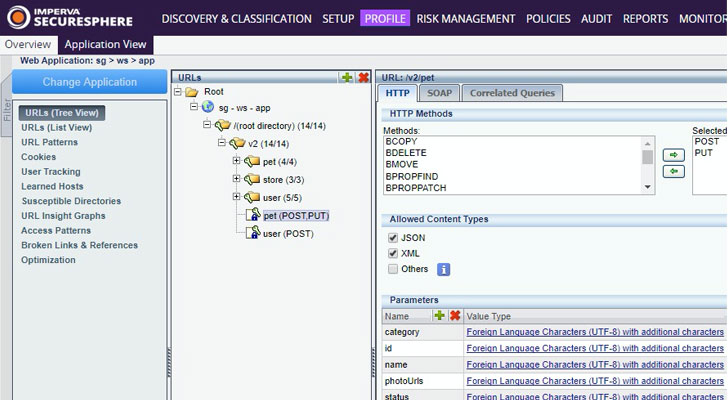
Imperva has been a leading name in WAF and distributed
denial-of-service (DDoS) attack mitigation. Most organizations now
maintain hybrid infrastructures consisting of on-premises devices
and cloud components such as instances, storage, and data
warehouses.
Imperva’s WAF can be deployed to protect these resources. It
profiles traffic and transactions conducted and prevents malicious
traffic and actions from accessing these components.
Penetration Testing — Metasploit
thing; checking if they actually work is another.
Companies shouldn’t wait for actual cyber attacks to happen to
find out if their solutions are properly implemented. They can be
proactive about and test their defenses themselves.
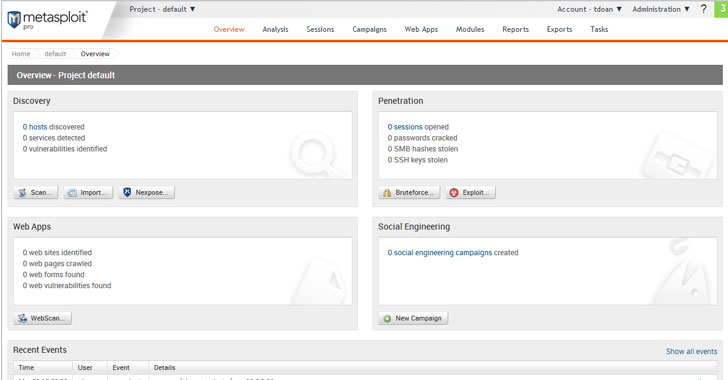
Administrators can perform penetration testing by using
frameworks such as Metasploit. It’s an open source tool that can be
configured to scan for exploits and even deploy a payload to
vulnerable systems.
Metasploit also features select evasion tools that could
potentially circumvent existing security measures. It can be used
on Windows, Linux, and Mac OS X systems.
Discovering gaps in security gives companies a chance to remedy
these issues before an actual attack actually strikes.
Anti-Phishing — Hoxhunt

a company’s cybersecurity chain.
Over 90 percent of security breaches are found to be caused by
human error. This is why cybercriminals still actively employ
social engineering attacks such as phishing to try and compromise
infrastructures.
Such attacks trick users into giving up their credentials or
installing malware into their systems.
HoxHunt[3] addresses this by
teaching users how to check if an email is a phishing message or if
a website is malicious.
Companies can train users using simulated phishing attacks.
Hoxhunt’s AI-driven engine even personalizes these attacks to copy
how real-world attacks look like.
Users can report these attacks through a special plugin, and
they get immediate feedback on how well they’ve performed.
Fraud Detection — Riskified

companies. Businesses also have to be wary of fraud attacks.
Hackers and fraudsters now have access to millions of valid
personal and financial information from previous data breaches that
they can easily manipulate business’ e-commerce channels, costing
merchants billions of dollars globally.
Solutions like Riskified offer comprehensive means to prevent
online fraud throughout the course of an online transaction.
Riskified uses machine learning to analyze each transaction and
only allows legitimate orders to be processed. It also provides a
dynamic checkout feature that automatically adjusts based on a
customer’s risk profile, providing various means for customers to
verify their purchases.
For instance, a customer with a higher risk profile may be asked
to perform additional verification steps without denying
transactions outright.
Investments Required
An effective cybersecurity strategy demands that businesses cover
all possible areas that can be exploited by attackers. This
requires adopting a comprehensive set of tools and solutions that
would keep their infrastructures secure. Implementing and
integrating these solutions do require spending.
But considering the costs that falling victim to cyberattacks
bring, it’s only prudent to make these investments. It’s simply the
reality of doing business in this highly digital landscape.
References
Read more http://feedproxy.google.com/~r/TheHackersNews/~3/P5zGS2MX4_E/cybersecurity-tools-enterprise.html